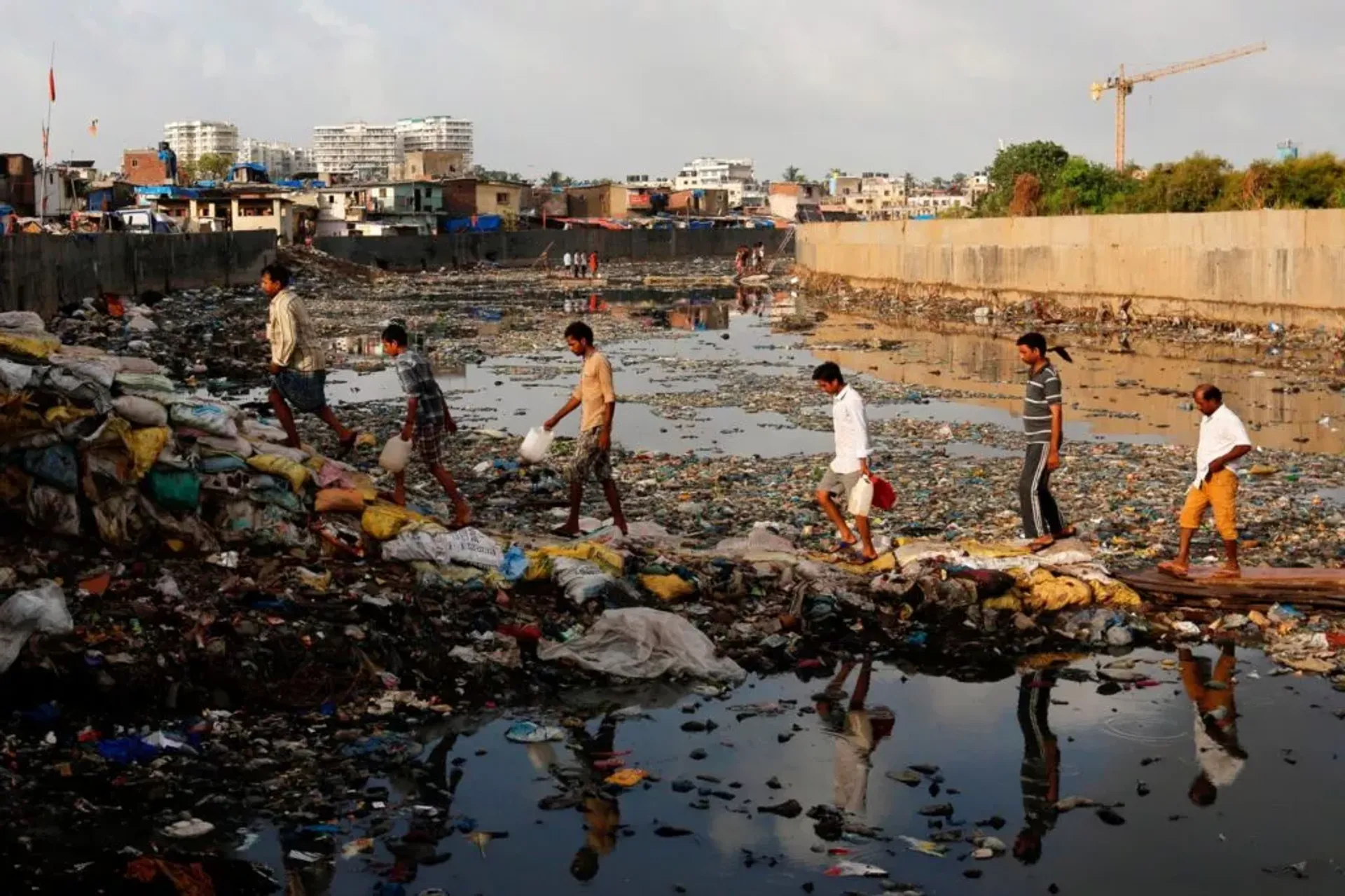
Wake-up Call
Enough. It has been so long since I’ve been wondering to myself, every time I learn an underexplored, yet life-threatening problem in India, why don’t people do something about it. I try finding research papers, but they either are not there, or honestly, they are on a very useless topic in all honesty.
I have tried. I have tried contacting people in the departments asking questions. I would try my best to contribute to the fight. But here is a list of problems that India faces that urgently need a well conducted scientific survey.
Air Pollution
-
https://agupubs.onlinelibrary.wiley.com/doi/full/10.1029/2023GH000968 this is the most recent study that I could find that does something worthwhile
-
There is no concrete research study on Possible intervention strategies to mitigate particulate matter and other pollutants in india. There are studies that tlak about the pollution numbers. Even fewer talk about its implication and effects on public health (I could not find a single satisfying study). And not a single study talks about possible actions that the government can take to mitigate and control the pollution levels.
-
I have no clue why the “Health Standards” for pollution levels for particulate matter such as PM2.5 and PM10 are so high in India compared to the WHO guidelines.
-
Look up research studies that suggests several techniques and intervention strategies to actually get things done, and not just state the tautology of us needing a strategy.
- https://aaqr.org/articles/aaqr-21-12-ssea-0377 A very hollow paper that really doesn’t talk about anything useful in my opinion: yet the only thing I could find.
-
We need a survey on Govt. policies and Schemes such as NCAP (claimed 40% reduction by 2026 https://energyandcleanair.org/wp/wp-content/uploads/2025/01/Tracing-the-Hazy-Air-2025_-Progress-Report-on-National-Clean-Air-Programme-NCAP.pdf might be of interest - very thorough. 29/97 cities actually got worse for pm10
- A analisis on effectiveness of Government policies on pollution control in the past 20 years would be helpful.
- The fact that the majority of cities are still struggling to meet even the initial target raises
serious concerns about the feasibility of achieving the ambitious 40% reduction within the
next two years. - Due to a lack of transparency in city progress, it remains unclear how cities achieved the
reported improvement in air quality, making it challenging to identify the specific actions
that led to such reductions. - Govt. did not release official data about what are the numbers by which things actually improved, got worse, or what the monitor conditions were. So we don’t have official numbers on how bad Delhi got, but currently, it’s 2nd most polluted in India. Interestingly, most is in Assam)
-
Respiratory deposition of particulate matter in Delhi: a five-year assessment of exposure patterns and health risks | Scientific Reports https://share.google/fKmbP4drWBS65uqfH
- A thorough study on PM data trends
-
An update on adverse health effects from exposure to PM2.5 - ScienceDirect https://share.google/TXGU2va4zjmpV3pZl
Harmful Chemicals That Stay Ill-regulated
- https://investigativejournalismforeu.net/projects/factories-on-the-run-from-italy-to-india/ A very clear and good work of Journalism on the problem
- https://www.sciencedirect.com/science/article/pii/S2772416625001597#sec0053 a GREAT survey
- https://www.bgs.ac.uk/news/presence-of-harmful-chemicals-found-in-water-sources-across-southern-indian-capital-study-finds/
- https://www.theguardian.com/environment/2025/oct/31/miteni-factory-pfas-plant-italy-india
- Asbestos: https://www.theguardian.com/global-development/2022/dec/19/we-are-all-exposed-to-it-the-human-face-of-indias-asbestos-timebomb
- https://pmc.ncbi.nlm.nih.gov/articles/PMC10290263/ The only research paper I could find on this. But this is a rather terrible paper in my opinion, presenting a few government statements and policy information and nothing else.
Natural Resouce Degradation for Commerical/Military Use
- https://www.bbc.com/news/articles/cn5ln4wee7wo
- https://economictimes.indiatimes.com/news/india/aravalli-100-metre-rule-explained-what-it-is-why-it-matters/articleshow/126137331.cms?from=mdr
- https://timesofindia.indiatimes.com/patna/congress-adani-group-given-1050-acres-land-at-rate-of-rs-1-per-year/articleshow/123907629.cms#:~:text=%E2%80%9CPM%20Narendra%20Modi%20on%20Monday,in%20Bhagalpur%2C%E2%80%9D%20he%20said.
- https://vaidsics.com/current-affairs/the-dismal-state-of-indias-environment
- I don’t understand why I can’t seem to find the official record of this transaction.
- https://www.downtoearth.org.in/waste/plasticdweep-lakshadweeps-paradise-buried-under-4000-tonnes-of-waste
- https://www.globalforestwatch.org/dashboards/country/IND/1/?category=forest-change
- https://article-14.com/post/-with-the-great-nicobar-project-we-will-lose-one-of-india-s-most-pristine-landscapes—6930fa6e20b2e
If you can contribute more to the list, and would like to write more surveys, feel free to reach out to contact@almostaphysicist.com